I Got Lucky... Other's Don't
A note before reading: This piece touches briefly on a period of depression and thoughts of self-harm, shared as part of one person's lived experience.
I’m gifted… apparently.
99.8% percentile.
A few years ago, I did a test that informed me of the news.
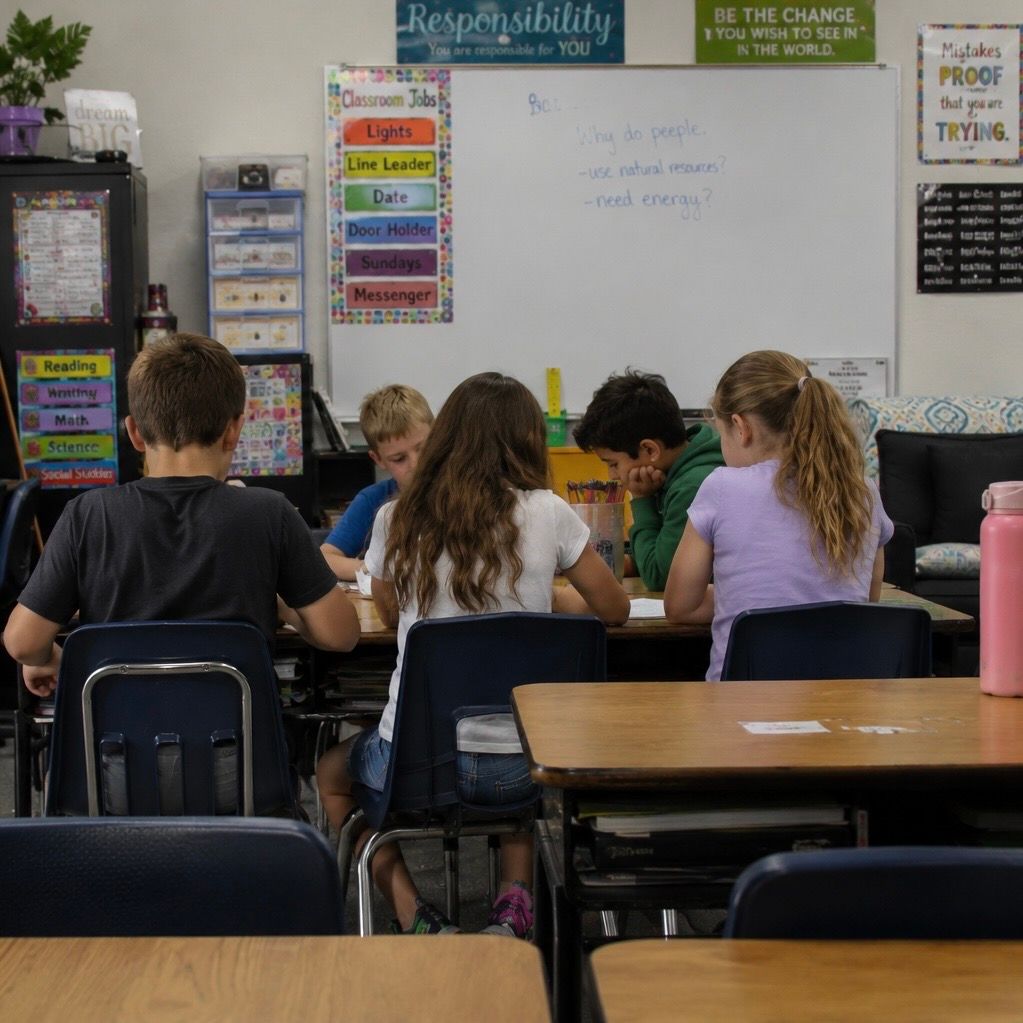
The whole world of giftedness began for me when trying to better understand the struggles my kids were having at school. Questions like “why are they like that” of course leads to an inevitable microscope placed upon yourself as the parent. In hindsight, knowing what I know now, giftedness seems obvious. But as a kid, I was not only completely ignorant to the idea but surrounded by classrooms where such a notion drew unwanted attention to yourself.
I grew up in a relatively low socioeconomic area. At school, lessons were mostly an inconvenience. I remember once explaining to somebody in year 3 that my favourite time in class was during exams when it was raining outside. Some thought it weird, I guess because of that I may have questioned if it was too.
Otherwise, school was about footy. Before school, morning tea, lunch, and then sprinting home the second the bell went. I only remember random snippets from primary school; one of my teachers’ obsession with lollies, the giant plastic mats with dishwashing liquid and hoses on the last day of the year, the goofy way a friend bolted out of a classroom one afternoon… I remember distinct events like they were yesterday, but generally it was mostly a blur and uneventful. I got along with pretty much everyone, but everyone was more of an acquaintance than a friend, except for one friend which you would describe as being close.
High school wasn’t much different. Lessons again felt more like an inconvenience that interrupted sport. One of my Year 9 report card comments was: “He relies too much on his ability.” It sat beside a row of A’s. I only remember it because my parents found the report recently and handed it back to me. As an adult and knowing what I know now, it was part of the overall “ooooohhhhhh” realisation moment.
Looking back, I cruised through school academically and never really learned how to study. Things came easily enough that I could get away with doing very little, and because of that, I never developed much discipline academically. Sport, cars, friends, footy, avoiding bullies - that was where my energy went.
I did have one friend through high school who, in hindsight, I suspect was also gifted. I’ll call him Pete. There was a similarity in how we thought. We’d bounce between ideas, projects, plans and random interests. Pete had a knack for fixing or inventing things. We couldn’t afford a CD player in the car, nor keep replacing the eight D-sized batteries for his portable stereo, so he rewired the back of it with a cigarette lighter plug to draw 12 volts directly from the dash. We sat the stereo on the back seat and thought it was brilliant. Pete’s room was always littered with gadgets, wires, half-finished projects and things pulled apart to see how they worked. We stayed close throughout high school. Then I started university.
I enrolled in a degree that, in hindsight, should have fascinated me. But something was wrong. For the first time in my life, what was being taught wasn’t just sticking. Worse still, I wasn’t interested. I’d sit through lectures feeling detached, then head off to training or skip classes entirely, figuring I’d just read the notes later and I’ll remember, and it’ll be fine.
But I wasn’t fine.
First semester was a scrape through. Second semester was littered with fails, withdrawals and subjects barely passed. I had no idea what was happening or why it was falling apart. Admittedly, I felt lost.
I withdrew from university at the end of the first year. Over the next four years I worked full-time while studying part-time, accumulating pieces of numerous different degrees before eventually giving up altogether. Being part time, the lighter subject workload allowed things to “stick” a little better. I had no real direction, no real motivation, I watched my friends finish their degrees and start their careers. I felt like I had missed the starting gun and was left floundering. Slowly depression crept in.
I joined the Army Reserves hoping that maybe doing something completely different might shake me out of it. It didn’t. Then, within the space of two months, the toys went out of the pram. I broke up with my girlfriend of four years, quit my job, walked away from the Reserves, and bought a one-way ticket to the other side of the world with no money behind me. Once through customs, I lived off baked beans and tomato soup, sleeping on floors, couches, and occasionally under large bushes in a park where nobody would notice me. My parents would have helped if they knew, but I made sure they didn’t.
I didn’t want anything. I didn’t want a career, didn’t want to travel, didn’t really want to work. I just felt flat. There wasn’t much thought of self-harm. Sure, it came up as an option, but the response to that was simply: “That’s pointless as I won’t be around to enjoy the problems it solves.”
Days turned to months. And then one night, one magical night, I had a night out with some old school friends who were also out that way. One of them days later dragged me to play rugby again. I later joined a rugby club and made new friendships with the team who had no idea how much of a turning point they had provided. I landed a job not long after and eventually enrolled in another degree. This time, a degree that I was intrigued with. I developed an interest in a career and found a desire to expand my education.
For the first time in my life, I sat in a classroom excited about what I might learn. The first time. Ever. I was 25. Again, I thought it weird… who gets excited about learning something? Apparently, most people.
I have since come to realise that the learning itself had never been the problem, rather the problem was that somewhere along the way I’d disconnected from it entirely. Nobody had ever really explained how my brain worked, nor noticed that cruising through school wasn’t necessarily the same thing as thriving. Due to this, the compounding effects (in my opinion) seem to have led to a loss of challenge, loss in direction, underachievement… you could include a loss of identity.
In time I returned to Australia a very different person. Education wise, I then had two degrees (completed this time).
I then also ran into Pete again in my late 20s. This time that connect wasn’t there with (as I later found out) him battling an opioid addiction which later manifested to a glass pipe. As it turns out, he too was lost post high school but encountered a different path. I deeply lamented on what might have, or rather, what should have been for him. Today, more and more is being learnt about gifted children and how to support them properly. It would be incredulous to suggest that all Pete’s problems stemmed from being a gifted person without support… but was it? We’ll never know.
I do sometimes wonder what difference that understanding might have made for both him and me. What if somebody had pulled me aside and explained why interest and engagement mattered so much, or why coasting through school wasn’t a good thing without challenge? What if someone had challenged me properly before I disconnected from learning altogether?
Maybe I would have achieved more. Maybe not in the end. But I suspect those six years after high school could have been far happier or fulfilling ones.
I don’t really see my story as a warning about giftedness and what may occur if awareness or actions are not put in place. Plenty of people have had far harder journeys than mine. Rather, if anything, I see it more as an avoidable near miss. I got lucky.
Others don’t.
Disclaimer: The views and opinions expressed in this blog are those of the author and do not necessarily reflect the official policy or position of the AAEGT.
Share this resource
Resources