Why Gifted Children Need Stage-Appropriate, Not Age-Appropriate Learning
"Why does time stop inside a black hole?"
It isn't the question most educators expect to hear while supervising the block corner in an early learning centre. Yet for many early learning teachers, moments like this happen more often than people realise. One child spends an entire morning constructing an elaborate marble run while explaining gravity. Another wants to know why volcanoes erupt or understand the human heart, in detail. A four-year-old carefully inspects the vein structure of leaves, wondering why some have more veins than others, instead of making leaf rubbings. These children are sometimes described as being ahead. In reality, they are usually something else. They are developing differently.
Giftedness in the early years is frequently misunderstood. Popular culture still suggests that gifted children are created through ambitious parenting, endless flashcards or expensive enrichment programs. However, the research tells a very different story. Long before children enter kindergarten or preschool, many gifted learners already demonstrate early development that simply cannot be explained by teaching or parenting alone. Researchers have found that many gifted children reach developmental milestones much earlier than expected. For example, earlier head control, sitting, walking, and fine motor development have all been documented, along with earlier speaking, often with surprisingly complex vocabulary and sentence structures. These findings remind us that giftedness is not manufactured. Rather, it is simply a different way of learning and growing.1,2
This also helps explain why many educators observe children who appear remarkably advanced in one area while simultaneously needing support in another. This uneven pattern of growth, known as asynchronous development, can be particularly noticeable in young, gifted children. For example, a child may discuss planets with extraordinary sophistication while struggling to wait for their turn during group time. A preschooler reading chapter books may still need reassurance at drop-off every morning. These characteristics aren’t contradictory, and they aren’t signs that a child is not gifted. Gifted children are rarely ‘little adults’. Instead, these behaviours suggest that the intellectual development of gifted children often races ahead while their emotional, social or physical development continues at a pace that is entirely appropriate for their chronological age. Gifted children can still experience big emotions, perfectionism, frustration or separation anxiety, and their abilities don't eliminate the need for nurturing relationships with trusted adults.2
Recognising this different pace of learning invites educators to rethink one of the most common phrases in early childhood education: ‘age appropriate’. Developmentally appropriate practice has rightly become a cornerstone of quality early childhood education. However, developmental stage and chronological age are not always the same thing. Gifted children frequently seek experiences that match the complexity of their thinking and their natural desire to understand their world, rather than the number of birthdays they have celebrated.
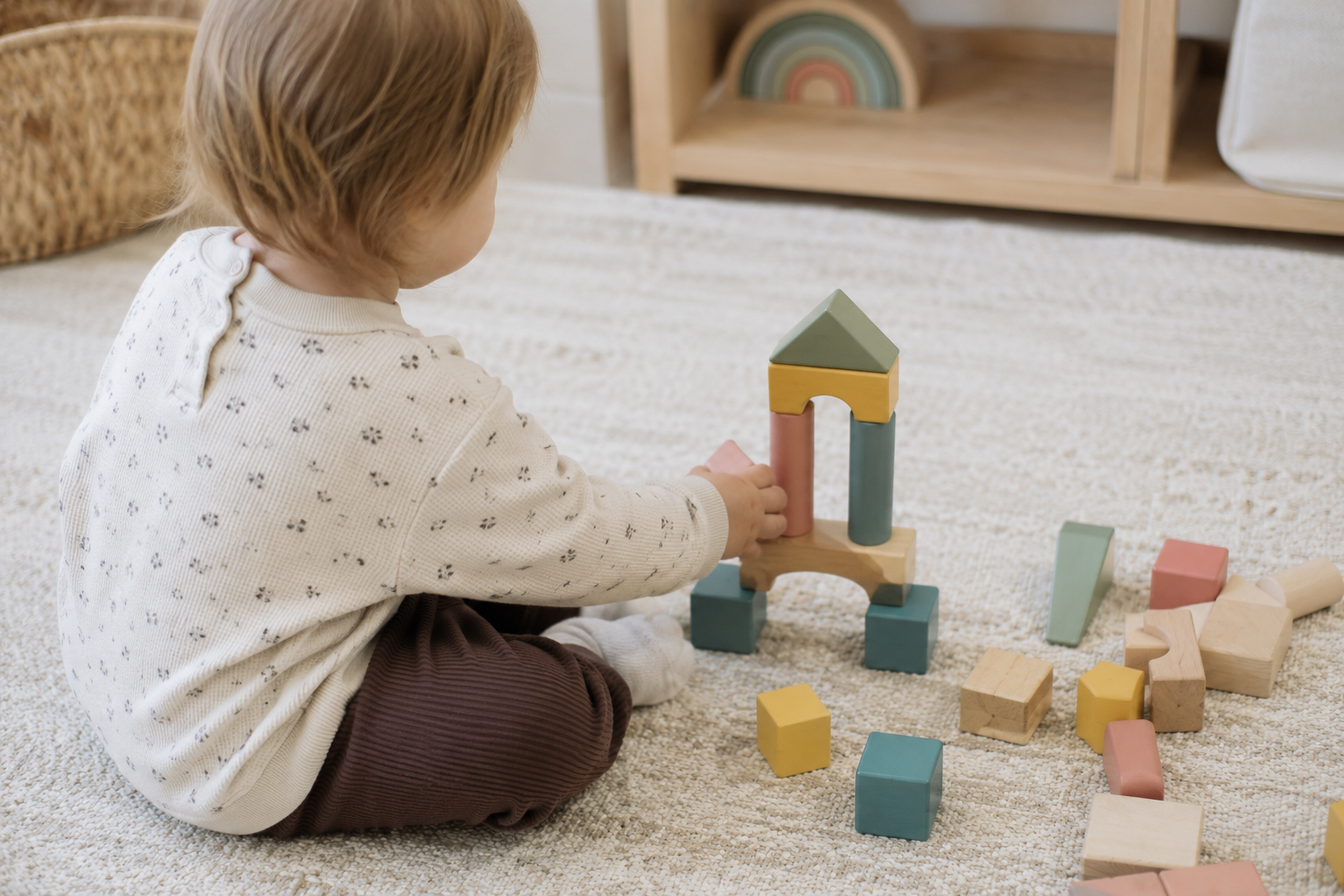
This can also be seen in how gifted children choose to play. Play is one of the most natural and important things a child can do, and gifted children play as wholeheartedly as any other child. Their play is often the same as that of other kids, and sometimes it’s more complex. When a four-year-old wants to design a city with functioning transport networks, create an ecosystem for insects, or learn everything they can about Egyptian history, adults sometimes worry they are ‘missing out’ on childhood. In reality, this is childhood for them. It is simply imaginative play operating at the level of the child's thinking. For example, a city with transport networks is simply a block corner with more moving parts. An ecosystem for insects is a bug hunt that didn’t stop at the finding. These kids are engaging in the same wonder, pretend and exploration as their peers. It just might look a little different at times. Play is defined by curiosity, imagination and exploration, and for gifted children, it simply grows in complexity alongside their thinking.
Gifted children's interests also tend to develop with depth and momentum. A topic that might hold another child's attention for a week can become a rich, evolving investigation. What drives this is a natural appetite to learn. Gifted children absorb new information quickly, often after a single explanation, and immediately want to know more. A child fascinated by insects is rarely satisfied with naming species. They want to understand ecosystems, adaptations, life cycles and how it all fits together. Their questions become increasingly sophisticated because their thinking naturally seeks depth and understanding. For educators, this presents a wonderful opportunity. Rather than redirecting these interests towards activities considered more suitable for the child's age, we should use them as vehicles for learning across every developmental domain. This is because rich conversations build language, drawing detailed observations strengthens fine motor skills, measuring, sorting and classifying introduce mathematical thinking, and collaborative investigations foster social skills.
Sometimes gifted children can catch us off guard, and it's not uncommon for them to know more than we do about some topics. In such situations, we should treat this as a chance to learn alongside them. For example, saying "I don't know – let's look it up" both builds the child's knowledge, and supports their sense of belonging in the classroom. Gifted children can also be wonderfully enthusiastic sharers of everything they know. This can look like showing off, but it rarely is. Like all young children, they assume the people they love find their discoveries as thrilling as they do. The difference is simply the volume and sophistication of what they have to share. A four-year-old announcing facts about deep-sea creatures is doing exactly what any four-year-old does with their favourite drawing or a wobbly tooth - offering you something they treasure. Responding with "Wow, I didn't know that – and did you know…?" tells them their treasure has been received.
Perhaps this is the greatest shift we can consider in early childhood education. Rather than asking whether an activity is appropriate for a child's age, we might instead ask whether it is appropriate for their unique stage of growth. Rather than wondering whether a child is too young to be interested in astronomy or engineering, we might simply recognise that curiosity has never paid much attention to birthdays, and choose to connect with the child instead. When we embrace stage-appropriate learning, we stop viewing gifted children as children who are rushing, or even being pushed, through childhood. Instead, we begin to appreciate them as children whose development doesn't follow the expected timeline. We can see them as children whose questions can be complex, whose interests might match those of older kids, and whose growth surges ahead in some areas while taking its time in others. These are not problems to fix, but characteristics to understand and work with. In doing so, early learning centres become places where every child can learn, wonder and play.
References
1. Delaune, A. (n.d.). Infant giftedness: What does the research say so far? A scoping review of literature 1982-2024.
2. Hamdioui, S., & Vaivre-Douret, L. (2022). Developmental characteristics of intellectually gifted children from birth to six years: A systematic review. Children, 9(7), 1012. https://doi.org/10.3390/children9071012
Disclaimer: The views and opinions expressed in this blog are those of the author and do not necessarily reflect the official policy or position of the AAEGT.
Share this resource
Resources